Economic contexts
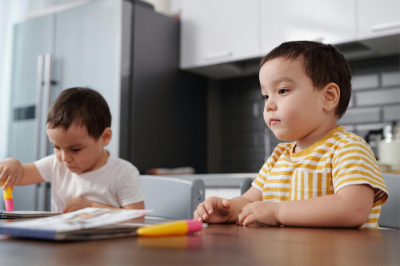
Economic context is the financial and social environment that shapes a family's ability to provide for their children's needs and help them to learn, grow and thrive. It encompasses things like poverty, housing stress, unemployment, financial security and cost of living. These circumstances can impact families' access to stable housing, nutritious food, healthcare, and educational resources and quality early childhood education and care (ECEC), resulting in inequitable opportunities for some children (Murray & Harrison, 2022).
Economic disadvantage can impact children's learning, participation and wellbeing in ECEC. But teachers need to be aware of families' strengths, and adopt inclusive, respectful and family-centred practices that will minimize barriers to participation (AGDE, 2022; Murray & Harrison, 2022).

Bronfenbrenner's Ecological Systems Theory explains that children's development is influenced by interactions between their family, community, education and broader social systems (Bronfenbrenner, 1979). Economic disadvantage is thus a structural problem, not a family problem, and is influenced by employment, housing, policy, and more. The knowledge of this helps teachers to address inequity rather than pointing an accusing finger at the child and/or family.

Children's economic disadvantage varies throughout Australia. Aboriginal and Torres Strait Islander children, children with disability, CALD children, refugee and migrant children and children living in rural and remote areas can bring unique strengths and identities and have additional barriers. Teachers need to establish a culturally responsive and inclusive setting that promotes the learning and wellbeing of all children (AGDE, 2022; AEDC, n.d.). Australian data also indicates the importance of early intervention and responsive ECEC practices as a way to minimise developmental vulnerability (AEDC n.d.; Australian Government Treasury n.d.).
Impact on Children and Families
Economic disadvantage can negatively impact children's cognitive, physical, social and emotional development, limiting their access to safe homes, quality early childhood education and nutrition and health care services (AEDC, n.d.; Murray & Harrison, 2022). However, it should not be assumed that the outcomes of children are attributable to poverty – a deficit mindset can be encouraged. Research from the current era reveals the importance of a responsive relationship, culturally safe environments and supportive community relationships as key protective factors for resilience (AGDE, 2022).

Financial strain can also have an impact on family welfare, parental psychological state and children's engagement with education and community. These impacts could be amplified for Aboriginal and Torres Strait Islander children, children with disability, CALD families, refugee and migrant children and children in rural and remote areas. Teachers must, therefore, practice and embrace equity-focused, trauma-informed, culturally responsive practices that recognise children's strengths, establish meaningful family connections, and demonstrate inclusion, belonging and high expectations for all children.
Five Evidence-Based Strategies
For educators, there are strategies that can help minimize the impact of economic disadvantage, such as engaging in culturally responsive, trauma-informed practices that value diversity and inclusion; building respectful family partnerships; and making learning opportunities accessible (AGDE, 2022; AIFS, 2025).
Teachers should partner with community services and professionals to link families to economic, health and social services (Baker et al., 2022). They should also minimise obstacles to participation and ensure inclusive settings in which all children feel valued, included and have high expectations.

Social Policy and Australian Responses

There have been a number of initiatives undertaken by the Australian Government to minimise the impact of socioeconomic disadvantage and enhance outcomes for children. The Early Years Learning Framework (EYLF) v2.0 has a strong focus on equity, inclusion and respectful partnerships and the Australian Early Development Census (AEDC) provides national information about developmental vulnerability and policy and community planning (AGDE, 2022; AEDC, n.d.).

Many families find early childhood education to be more available when they receive the Child Care Subsidy (CCS). There are however, barriers to children and young people from Aboriginal and Torres Strait Islander communities, children with disability, refugee and migrant families, and children in rural and low socioeconomic communities. Policies should be implemented in an inclusive, culturally responsive and family centred way to ensure all children are able to participate, belong and thrive (Murray & Harrison, 2022).
Professional Websites & Programs
Provides evidence-based research on child development and family wellbeing. Works in partnership with families to support family-centred practice, evidence-based decision-making and appropriate referral pathways.
Minimises educational disadvantage through financial assistance and learning support. Refers eligible families to educational assistance, increasing children's participation and engagement in learning.
Provides national and community developmental data. Assists educators with curriculum planning, early intervention and advocacy for children's developmental needs.
A trauma-informed framework that promotes wellbeing, emotional safety and positive relationships. Strengthens resilience, belonging and relationship-based practice within early childhood settings.
Children's Books

Maddi's Fridge – Lois Brandt
Provides information about food insecurity, friendship and kindness.

Those Shoes – Maribeth Boelts
Promotes empathy as they discover poverty, needs and wants.

Last Stop on Market Street – Matt de la Peña
Shows a positive attitude towards being thankful, working together and acknowledging strengths when money is limited.

Whoever You Are – Mem Fox
Encourages a culture of inclusion, diversity and respect for all children irrespective of their background.
Videos, Podcasts & Educational Media


Community and Professional Partnerships
Children's wellbeing and equitable outcomes are supported by effective partnerships between early childhood services and community organisations. It is important that educators work in partnership with the Australian Institute of Family Studies (AIFS) and Child Family Community Australia (CFCA) to access evidence-based resources and support for families. Early identification, assessment and intervention for children who have developmental or social-emotional needs is supported by partnerships with speech pathologists and psychologists. Aboriginal Community Controlled Organisations (ACCOs) provide culturally safe support for Aboriginal and Torres Strait Islander children and families and local health services and Child and Family Health Nurses provide health and developmental monitoring and referral. Collaborative, family-centred partnerships ensure services are responsive to children's diverse strengths, identities and needs, enhancing their inclusion, participation and long-term learning outcomes (Baker et al., 2022; Flottman et al., n.d.).


Critical Reflection
Children's resources should be critically evaluated for their cultural responsiveness, strengths-based and inclusive nature, and lack of stereotyping and deficit perspectives. Resources should be of high quality and reflect Aboriginal and Torres Strait Islander children, children with disability, culturally and linguistically diverse (CALD) children, refugee and migrant children and children from diverse family structures in an authentic way. These resources, when used thoughtfully as part of everyday practice, encourage empathy, resilience, belonging and social justice, and help to build respectful relationships between children, families and communities.
Create Your Own Website With Webador